Aircraft Parts

9 Ways To Reduce Stock & Increase Order Efficiency

Want to know how you can carry little inventory and still support your maintenance projects? Drumroll please.

Increase-order-efficiency

Through proper planning.

On the eve of a particular Monday I received a “list” of a 100 line items in the form of a good ‘ole consumable / expendable RFQ. You know, the sealants, wire, tape, nuts and bolts type.

Myself and the sales support team began processing the RFQ but something was off.

Something wasn’t right.

Each line item I looked at was ordered last quarter.

I began to wonder why this particular airline was re-creating a process they had already completed the prior quarter.

My mind immediately envisioned a simpler way.

Through proper planning and communication this exaggerated process is 100% avoidable. [CLICK TO TWEET]

After they purchased this requirement “again” they spent an additional $10,000 on labor, processing, shipping and other nuances.

No prices increased and some items had lead times that they had to accommodate.

With proper planning they could have saved $10,000, increased efficiency and avoided stock out delays.

Stock out delays result in increased purchases which leads to excess inventory do to “trying” to avoid the issue in the future.

An inefficient purchasing system

Sending out RFQs to the entire world is a common practice but is it the most efficient?

Industry norm of the send RFQ and watch the flood of quotes come in is okay, but it isn’t efficient.

And it isn’t a viable way to increase vendor reliability as the floodgates of various sources rush in.

This creates improper forecasting, stock buildup, and additional costs to your procurement process.

By the time you receive the quotes, process them and cut the PO, the order cycle has been dramatically extended.

This is especially true for repeat purchases where 95% of the processing time could be avoided, saving money, time and excess stock through vendor demand forecasting.

9 ways to reduce stock and increase order efficiency

Holding onto stock isn’t your primary goal.

It’s not what gets you up in the morning, what you think about during the day or what pays the bills.

Simply put, it’s not your profit generating activity.

Here are 9 ways to reduce your stock and increase order efficiency:

  • Use vendor managed inventory & vendor stocking programs: With the right incentives, letting VMI suppliers take the responsibility for replenishment of your inventory, because of their visibility into both their own inventory and your demand data, will always reduce your inventory. Primarily used for maintenance inventories VSPs require your supplier to commit to an extremely high service level for delivery of specific products within a fixed time at a pre-defined mark-up over cost. VSPs can reduce or eliminate inventories for slow-moving products.
  • Reduce lead times: When supplier lead times are reduced below the required lead time you set it’ll help remove the requirement to hold much stock, especially consumables. Cutting lead times in half will reduce safety stocks by about 30% for the same availability.
  • Improve reliability of supply: Unreliable supply is one of the reasons for holding safety stocks. If delivery is guaranteed on the due date then safety stock can be reduced what's needed to cover common-cause variability. A good start is sharing demand, forecast and stock positions with suppliers. When there’s heightened transparency of information throughout the supply chain it’ll improve reliability and mitigate Bullwhip/Forrester effects.
  • Order more frequently: This reduces cycle stock and will often cut it in half. There is a cost as each order will require additional administration overhead and a labour cost to receive the goods. The former can be mitigated with automation and management by exception or through better planning in a Just In Time inventory program.
  • Expedite more effectively: Solving supply chain failure quickly will undoubtedly improve service. We’ve all had AOG nightmares. Strong relationships with suppliers means that your expediting process will contribute to 1% point to availability. Without that, availability would have been at 95% – or put another way, good expediting reduced service failure by 20%.
  • Forecast more accurately: Better forecasting means lower safety stocks and higher levels of availability. It also means a reduced exposure to excess and obsolete stock risk (a large contributor to your holding cost of stock).
  • Liquidate: There’s always a short-term price to pay on the profit and loss (P&L) and the balance sheet, when it’s clear that the value to be gained through liquidation is greater than the most optimistic estimate of future gross margin from conventional product sales, then liquidation is the best decision. You are not in the conventional product sale business so liquidation of absolute or unnecessary stock is highly optimal.
  • Strangers strategy: Where there’s a lot of slow moving product in the range, seriously addressing the fulfilment rules of your maintenance activities can make a big difference. Integrating closely with suppliers may enable a back-to-back ordering process and removes the need to hold stock altogether. A close relationship with your supplier is crucial.
  • Change the network configuration: The general rule is that the safety stock in the system is proportional to the square root of the number of locations. A hub and spoke approach. Apart from this, understanding the relationship between main store availability and satellite availability is vital. This allows the right balance to be struck between stock in different tiers of the supply chain. Fixing a typical imbalance could reduce stock by up to 10% overall.

Whether you choose one of these strategies or all 9, your primary goal is to reduce stock and increase efficiency.

I challenge you today to implement one and began to make a shift of mass RFQs to structure and deliberate action to your RFQs.
Is your procurement process out of control? Do you have surplus inventory? Are your maintenance projects consistently over budget? Comment below.

Retirement Plan For End Of Life Aircraft

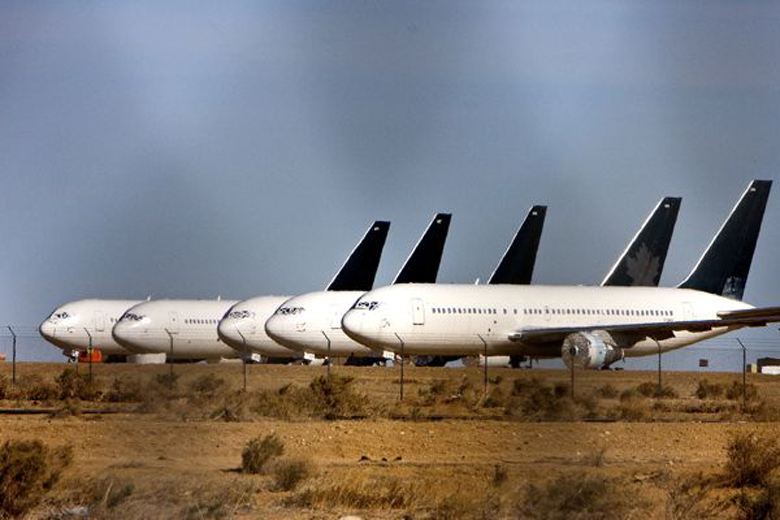
There comes a day when aircraft get old and it’s time for them to retire. Their joints begin to ache, their bolts begin to fall out and their oil dries up.

end of life aircraft

If you have or know of such an aircraft that’s hurting and barely getting through its last days, we want her.

We’re looking for various teardown candidates who have reached the end of their life.

The current aircraft we want to put in on our retirement plan so they can feel happy and useful once again are:

Boeing 737-300/400/500

We've worked with Boeing aircraft for over a decade. The B737-300/400/500 aircraft is dear to our heart and we want to make sure that she gets the most out of her life. She is our short to medium-range twin jet narrow-body work horse.

Boeing 767

With an increasing number of clients utilizing this aircraft we want to make sure they're covered. This mid to large size, long-range, wide-body twin-engine jet has become a  popular choice and we would like to add more to our retirement plan.

Airbus A320

Another popular short to medium range, narrow-body aircraft that comprises a large amount of our maintenance traffic. Since she is popular by our clients, we would like to continue to add more of these aging aircraft to our retirement program.

ATR42 and ATR72

With the first ATR produced in 1984, these regional, twin-turboprops have been a major product line at Skylink. They are a unique blend of elegance and efficiency and as they age we want to make sure they go out peacefully.

Lockheed C-130 Hercules

A major player in the military transport field, this four-engine turboprop is a major transporter for the international Air Forces we work for. She is strong, yet aging. To continually support newer fleets cost effectively, we must be able to use pieces of aging fleets. We will evaluate any model available for tear down.

As you can see, we have a few aircraft that we want to continually add to our retirement program. These aging fleets deserve final days on green pastures and we want to grant them that wish.

If you have or know of one of these aircraft reaching its retirement point: CLICK HERE

Surplus Robbery And Why To Avoid Excess

Young-man-surprised

Young-man-surprised

Have you ever walked down a busy urban street to eventually find out you’ve been robbed?

Or, maybe you're like me, a type that goes grocery shopping while hungry.

I’ll go down each aisle, stomach growling and toss junk in my shopping cart.

A week later I’ll reach into the refrigerator and find out that my vegetables are rotting, the meat is smelly and my fruit is beginning to attract several flying creatures.

These two scenarios have one thing in common, lost money. When you're robbed you lose money immediately but when you overbuy money is lost over time.

Now, the problem with these 2 scenarios is your surplus inventory is similar to both.

I know, hold the screaming and crying.

Aircraft surplus robs you blind

I challenge you. Go through your inventory and calculate the amount of money that's been tied up on your shelves for more than 12 months.

Is it 50%? 75% Maybe even 90%?

Now, think of that money sitting in a large pile in the middle of your warehouse. Do you have the image?

Now light it on fire!

Inventory that’s been on your shelf for greater than 12 months is a poor inventory turnover strategy with negative effects on cash flow.

Just picture how this money could have been allocated. I’m sure you have more important projects than just sitting money on the shelf watching it get dusty. This is why we created our aircraft asset management program.

Our goal is to minimize your inventory's shelf life, reduce holding cost and capitalize on generating revenue from your aging material. Aging assets is a poor way to manage your money.

With so much focus on hedging fuel, creating ancillary revenue, you should also focus on minimizing idle, wasted inventory.

Don’t sit and wait.

Look at your inventory, scream out loud and take action. Liquidating this excess is a bright future for your cash flow.

And just possibly an aircraft asset management program may be a good solution for your operation.

If it is, contact us today by CLICKING HERE and saying "Help me eliminate our surplus nightmare."

High Turnover and the Inventory Dream

You sit in your office, wondering, waiting.

The mess on your shelves is a never ending doom of dust and debris.

You fight with yourself trying to figure out when it will sell or when it should be scrapped.

high inventory turnover through asset management

Aircraft component surplus is a common problem. A costly problem.

It’s a marriage problem.

Often times people feel married, dedicated to the parts.

A few years ago, more like 7, we decided to move to another location.

We had old Rolls-Royce engine nacelles lining the wall, several hundred feet of wings and struts hanging and consuming the outside perimeter of the warehouse.

Prior to the move I walked into the warehouse, with a deep sigh, and thought, what a bunch of junk.

The material had sat in the warehouse for over a decade and was deemed useless and costly to continue to sit. So we decided to scrap it.

Now, as an airline you have the option to consign the material to someone like Skylink but for us, at this time, scrapping was in our best interest.

For you, creating a strategy where you have high inventory turnover may seem impractical, but it may not be a so far from being just a dream.

Inventory turnover

Inventory turnover is defined as how many times a company’s inventory is sold and replaced over a period. This is a valid definition for someone like Skylink.

For you, inventory turnover is defined as the liquidation of unnecessary components to reduce cost and fund profit generating activities.

High inventory levels are unhealthy because they represent an investment with a rate of return of zero. It also opens you up to trouble should prices begin to fall. Another very big issue we see.

Often times airline surplus is still expected to get the same return from pricing 10 years old. Unrealistic and hard to achieve.

The best option to avoid this is to consign your assets to a trusted partner who specializes in the resale of aircraft spares. And it’s for this reason we have our Asset Management program.

By utilizing a skilled partner who does this day in and day you will ensure a higher inventory turnover than you experience now, it will cost you less to staff and facilitate sales, and reduce your overhead expenditure.

An asset management program is an excellent tool if you see your inventory levels rising and dust beginning to collect.

If you're interested in such an asset management program, Click here

5 Ways To Be Cheap And Profit

Let’s face it you want to be cheap.

This isn’t always true through procurement since quality comes at a higher price. Getting a WalMart “Everyday Low Price” is a scary thought for a $50,000 avionic.

But operationally you want to be cheap without sacrificing efficiency. This is why we are a huge proponent of Lean Six Sigma.

Aircraft Asset Management

I had the opportunity to discuss this very topic with an airline executive.

We entered the coffee shop and a fresh aromatic smell entered our noses. You know the smell I’m talking about.

We ordered our coffee and discussed the war stories we each had encountered in the aviation industry. Both witnessing tragic endeavors for nearly 2 decades in different parts of the aviation industry, we had a lot to talk about.

Finally our names were yelled as though we were at a fair. Our coffee was ready and with scorching hot cups we proceeded to sit.

I bluntly asked the gentlemen, how he precluded to ensure operational efficiency.

His answer was, do everything ourselves.

I about fainted and blurted out WRONG.

Operational Efficiency

Operational efficiency is defined as the “...ratio between the input to run a business operation and the output gained from the business. When improving operational efficiency, the output to input ratio improves. Inputs would typically be money (cost), people (headcount) or time/effort. Outputs would typically be money (revenue, margin, cash), new customers, customer loyalty, market differentiation, headcount productivity, innovation, quality, speed & agility, complexity or opportunities.”

I will cut to the point to avoid any sudden onslaught of boredom.

For any airline operational efficiency is when you operate to maximize your revenue generating activities and minimize your expenses. Easy I know. I’m no Albert Einstein when I define this.

The problem with my airline friend's response in the beginning story is that he relies too much on internal pressures where certain activities could be outsourced.

Managing inventory, aircraft asset remarketing, and surplus inventory and sales is not his strong suit. He’s adding additional expense and taking away from their core focus, keeping the fleet in the air and reducing cost.

How to be cheap and profit

We all want to reduce cost, it’s the best way to expand the bottom line. As long as you aren't cutting back where operational efficiency will suffer.

I have 5 ways you can save, generate more money and become more profitable by utilizing an aircraft asset management partner.

Reduce cost of money: Nobody likes holding cost. Lets say you have $5M worth of inventory in which you're more than likely sitting on a credit line. What if you could reduce that inventory to $4M? I’m sure you could use the additional $1M in increased cash flow rather quickly, for better uses. This cost is typically seen at 15% of your average inventory.

Cost on $5M of inventory = $750,000

Reduce storage cost: No matter if you own or lease you’re paying for warehouse space. The more inventory you have, the more warehouse you need. From computers, to racks, mezzanines to boxes the list can go on. What could you do with a smaller space? Storage cost adds 4% to your carrying cost.

Cost on $5M of inventory = $200,000

Reduce Taxes: Ronald Reagan once said, “Government's view of the economy could be summed up in a few short phrases: If it moves, tax it. If it keeps moving, regulate it. If it stops moving, subsidize it.” Your inventory is always moving so whether you like it or not the government will more than likely tax it depending on where you're located. From an accounting standpoint, an increase in inventory is shown as a profit and will be taxed as such. Taxes will typically add 2.5% to your annual carrying cost.

Cost on $5M of inventory = $125,000

Reduce waste: Let’s face no matter how much you plan waste will always follow inventory. You cannot plan the market 100% of the time. From overbought gaskets whose shelf life has been reached, an outdated TCAS system, or excess expendables waste is on your shelf. It can be safe to say that most of these won't be going anywhere any time soon. Waste can usually add 1% to your annual carrying cost.

Cost on $5M of inventory = $50,000

Reduce shrinkage and spoilage: Dan Kiefer explains this best when he says “...This category should not be confused with obsolescence.  This category includes inventory that came into the warehouse and should have been sold but can’t and won’t be.  Where as obsolescence and spoilage have to do with purchasing and the market demand, pilferage and damage can often be attributed to human behavior in your warehouse.  Although this  cost can vary greatly from one warehouse to the next, and can often be controlled and reduced, it can never really be eliminated.  Whether a forklift hits a pallet, a jar gets dropped during handling, or someone gets overzealous with a box cutter, damaged products in a warehouse are a fact of life and must  be accounted for.   The longer something sits in your warehouse, the greater the risk of it being damaged or disappearing.”  The typical cost associated with shrinkage and damage is 1%.

Cost on $5M of inventory = $50,000

Reduce insurance: Your insurance company is charging you based on the average amount of inventory you have on your shelf. If not, please refer me to your insurance company as I’ll change policies immediately. The cost is not huge but it’s still an unnecessary cost for unwanted, unused material. Insurance costs are typically .5%.

Cost on $5M of inventory = $25,000

For a $5M inventory your annual carrying costs are $1,200,000. WOW!

You can solve this by taking advantage of an asset management program.

Whether it’s an aircraft ending its life or surplus inventory sitting on the shelf the right partner can market your assets at an attractive price to liquidate and generate revenue.

You will immediately reduce carrying costs and operate within operational efficiency.

We have just the program for you. Click here to show your interest.

Why Your Material Assets Eat Away At Your Bottom Line

Not long ago having a lot of inventory common. It was "smart", right and the industry norm. You had something when you needed it...if you ever needed it.

Aircraft Asset Management.jpg

I used to think this way as well.

I'd wake up every morning, sip on my coffee, and wonder how I was going to keep plenty of stock. Always. But then one morning I woke up and the coffee smacked me clear across the face.

We opened up various airline and MRO client financials and calculated furiously, Albert Einstein style. I tend to think him and I as one of the same, but anyway...

The financials argued against everything that was industry norm. Insurance premiums continued to soar, warehousing and distribution costs were at an all-time high, and overhead was out of control.

Carrying costs were clearly not in the best interest of our airline and MRO clients. 

Are you losing your ass-ets?

Inventory is necessary but excess is a sin.

Excess is overspent, unwanted surplus that you have no control over. It’s a blood sucking insect that is more of a pain than it is a benefit.

According to "Production Spare Parts: Optimizing the MRO Inventory Asset" they state some sobering facts:

  • In a typical production plant, about 30 percent of the spare parts sitting on shelves are unnecessary.
  • More than 60 percent of all stocked spare parts have not been used in three years.
  • About 35 percent of all spare parts are critical to operations and not easily attainable with short lead time.
  • Between 10 and 20 percent of the parts account for 80 percent of the total inventory value.
  • Annual carrying costs associated with spare parts is between 20 and 25 percent, meaning the cost to a company of every spare part stocked doubles in four to five years.

Manage your assets the right way

Finding ways to avoid carrying costs is easy, but implementing them is a chore. 

It takes a planned strategy and proper support.

Here are a few ways we recommend for you to manage your aircraft assets and bottom line:

1) Streamlined Distribution: Procurement for aircraft checks will encounter bottlenecks. Talk with your trusted material advisers during this process and organize maintenance check material distribution strategy.

2) Vendor Managed Inventory: The JIT strategy benefits are low inventory, low wastage, high-quality production, and increased up-time. It reduces carrying costs and the effort into having to repurchase common material.

3) Repair management: Recycling your inventory through MROs is mandatory but dealing with the mess having to manage MROs is another story. A repair management program will do all the work for you. It'll save you a lot of money on freight and processing costs. 

4) Asset management: Whether you have surplus or you're slowly building the unwanted dust an asset management program will help you liquidate your surplus material. You'll recapture the lost capital tied up into your inventory. Or if you have an end of life aircraft consign it to a reliable party so they can tear it down and sell the assets. You'll have thousands of profitable spare parts generating revenue for you while keeping a depreciable asset.

Focus on stocking enough for minimum requirements and adopting new strategies for streamlined distribution. You owe it to your  bottom line. And stop losing your ass-ets. 

Need to sell your surplus? 

Wasting money? 4 Reasons Why an Aircraft Asset Disposal Program is Right for You

Are you frustrated with idle inventory? Do you wish the money invested into holding costs could be utilized more efficiently? I feel your pain!

I've visited aircraft graveyards in the Mojave as well as large warehouse facilities of airline material management divisions, much like yours.  But I also understand this because I too sit on millions of dollars worth of inventory that have long since been idle.

Whether it be planning for a surge in traffic with the forecast falling short of expectations, modification of an existing aircraft, or an  aircraft on their last stretch of useful life, these are valid reasons for a surge in surplus. But, is this necessary? Maybe.

Back in 1999,  Skylink acquired an  L1011 (see the trivia question to see which celebrity we bought this from), tore it down and began distributing the spares. Not shortly after all the major components we're sold, demand began to fall and we were left with low turnover inventory sitting on our shelves. Why does this matter you ask?

Well, this what our business model is based on, and yours…creating high yield routes, keeping the aircraft in good shape and providing safe transport.

Here are 5 Reasons you Should Consider an Asset Disposal Program:

Helps Fund Operations

Idle inventory never funds an airlines strategic initiatives. It's wasteful, time consuming, and costly. Liquidating this surplus to continuously help fund your operations is an incentive that can be considered.

Idle inventory, is just that, idle inventory. But the money from liquidating such inventory can be used throughout your organization.

Helps you Focus on Core Competencies

Ian Heller's Five Components of a Business Strategy states that in order for an airline to be competitive it must provide consumer benefits, a model that is difficult for competitors to imitate and something that can be leveraged widely to many products and markets.

So what does this mean for you?

Well, it means do what you do best. Create an unbelievably integrated organization that provides valuable services for the customer at the lowest cost. Idle inventory only adds to this cost and the time spent storing and funding logistical avenues for such inventory can be a burden to an airlines overall model.

Helps Reduce Staffing Cost

An aircraft asset disposal program can also reduce staffing cost. No, I don't mean by making cost cuts by eliminating positions, but more importantly utilizing  staff in areas that are more central to the core competencies.

This will allow you to be more efficient, by reducing staffing cost in unproductive idle inventory monitoring activities.

Helps with Higher Asset Turnover

Healthy aftermarket organizations  whom have been in business for decades know the market and what it takes to liquidate spares. They also have experience in quality control,  logistics, warehousing, inventory management and repair management, by which they perform day in and day out. This is their focus and this is what their good at.

In essence utilizing a good aircraft asset disposal  program may be of interest to you. Lowering costs, focusing on core competencies and engaging with a trustworthy aftermarket distributors is key to managing the over abundance of spares in your warehouse.

What would you want out of an aircraft asset disposal program? Respond in the comment section below.